Style guide
Arabic vs Indian vs Khaleeji Henna How to tell them apart, and which suits you
Arabic henna uses flowing floral trails with open skin, Indian mehndi fills the hand with fine detail, and Khaleeji henna is bold, with large blocks of colour. Henna by SAbeauti applies all three in Dubai, from AED 55 for one hand.
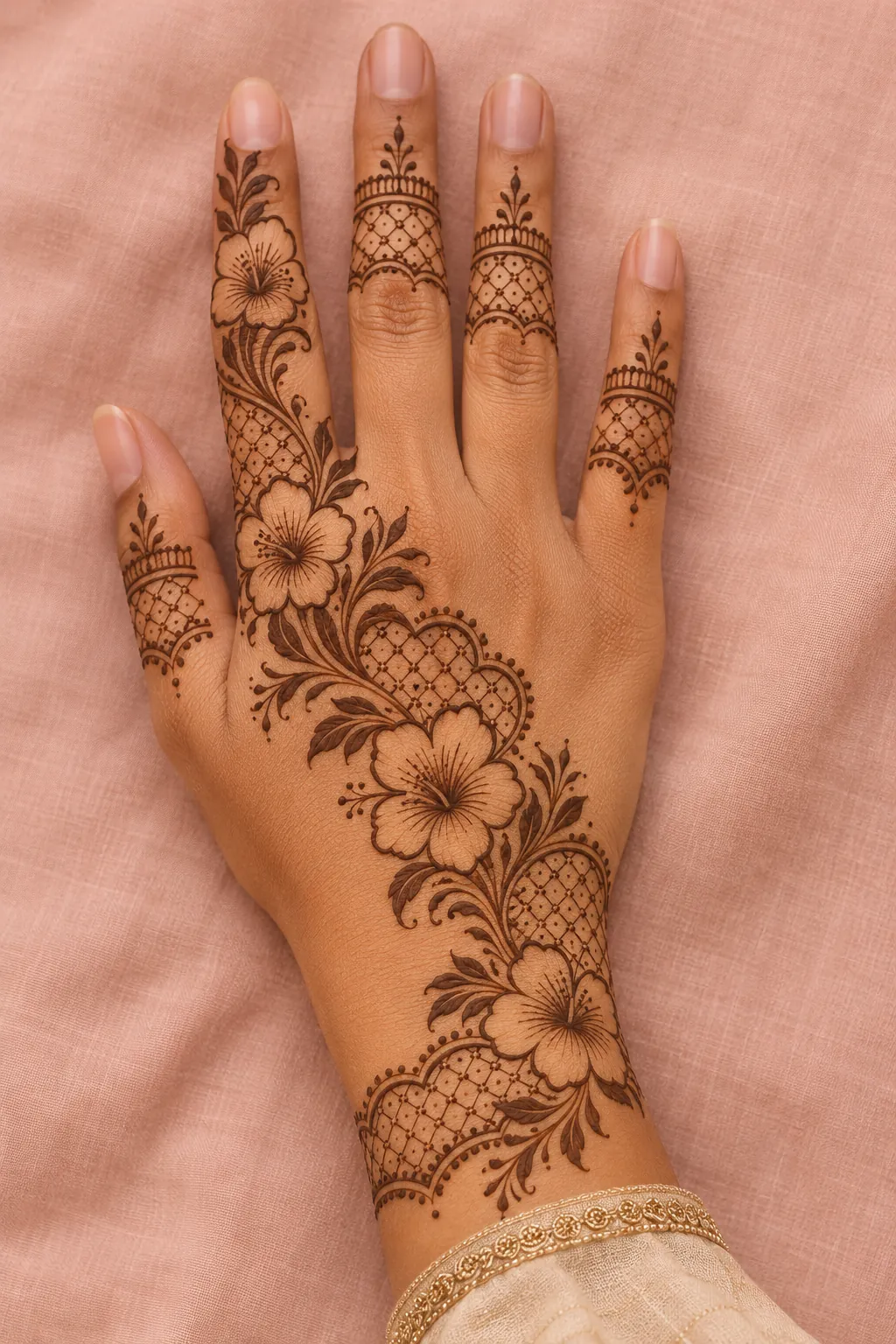
The short answer
Look at how much skin shows. That one test tells you most of what you need to know.
If you can see plenty of bare skin between flowing lines, it is probably Arabic. If the hand looks almost fully covered in tiny detail, it is Indian. If you see big, confident shapes with solid filled areas, especially on the fingertips, it is Khaleeji.
- Arabic: open, flowing, diagonal, quick to apply
- Indian: dense, fine, symmetrical, slower to apply
- Khaleeji: bold, graphic, with strong filled areas
What makes Arabic henna Arabic
Arabic henna grew up across the Middle East, and its signature is a trail. A single vine of flowers and leaves usually runs diagonally from one finger towards the wrist, with shaded petals and generous space around it.
Because it leaves so much skin bare, it looks modern and light, and it sits well with rings and bracelets. It also takes less time than a full design, which makes it a popular choice for Eid and for guests at parties. See more in our Arabic henna designs.
Indian mehndi: detail is the point
Indian mehndi is about fullness. Thin lines build up into paisleys, mandalas, lattices, peacocks and lotus flowers, and very little skin is left empty. Designs are usually symmetrical, with both hands matching or mirroring each other.
Bridal work can go further still, with figures of the bride and groom, wedding scenes and hidden initials. Patterns often run to the elbow and the knee. It takes the most time of the three styles, but the result feels like lace. Indian mehndi is the natural choice for Diwali, Karwa Chauth and traditional weddings.
Khaleeji henna, the style of the Gulf
Khaleeji means "of the Gulf", and this is the style you see most at Emirati and Gulf celebrations. It shares its flowers with Arabic henna, but it is much bolder. Lines are thicker, petals are larger, and the fingertips are often filled in completely, an old tradition that still looks striking today.
Think of it as Arabic henna with more confidence. A Khaleeji design reads clearly from across a room, which is why it is so loved at henna nights. Geometric bands around the wrist and the fingers are another common detail. Browse examples of Khaleeji henna to see the difference.
How to choose between them
Start with the occasion, not the picture. These questions will quickly narrow it down:
- Do you have an hour, or an afternoon? Arabic is the fastest, Indian the slowest.
- Will people see your hands up close or from afar? Fine Indian lines reward a close look, and Khaleeji carries further.
- Are you wearing a lot of jewellery? Arabic leaves room for it.
- Does your family have a tradition? Your mother's or grandmother's style may mean more than any trend.
You do not have to pick just one
Most designs you see online are blends. Indo-Arabic henna puts Indian filler inside Arabic trails, and many Khaleeji designs now borrow fine lines from Indian work. If you love two styles, show your artist both.
Price follows the area and detail of the design, not the name of the style. At Henna by SAbeauti, prices start from AED 55 for one hand and from AED 375 for both hands to the wrist, VAT included. Bridal work is priced on request.
All three styles are applied in 100% natural henna at our ladies-only salon in Dubai, or an artist can come to you anywhere in the UAE. Save a photo of a design you like, then book your henna and share it with us.
Which style lasts the longest?
None of them. The style does not change how long it lasts. Natural brown henna lasts 1 to 2 weeks, though bold filled areas may look strong for longer as they fade.
Which henna style is easiest to wear to the office?
A small Arabic trail on one hand is usually the most understated, because it leaves plenty of bare skin and takes little time.
Is Pakistani mehndi the same as Indian?
They are close cousins, both rich in fine detail. Your artist can show you how the two differ for your design.
You may also like
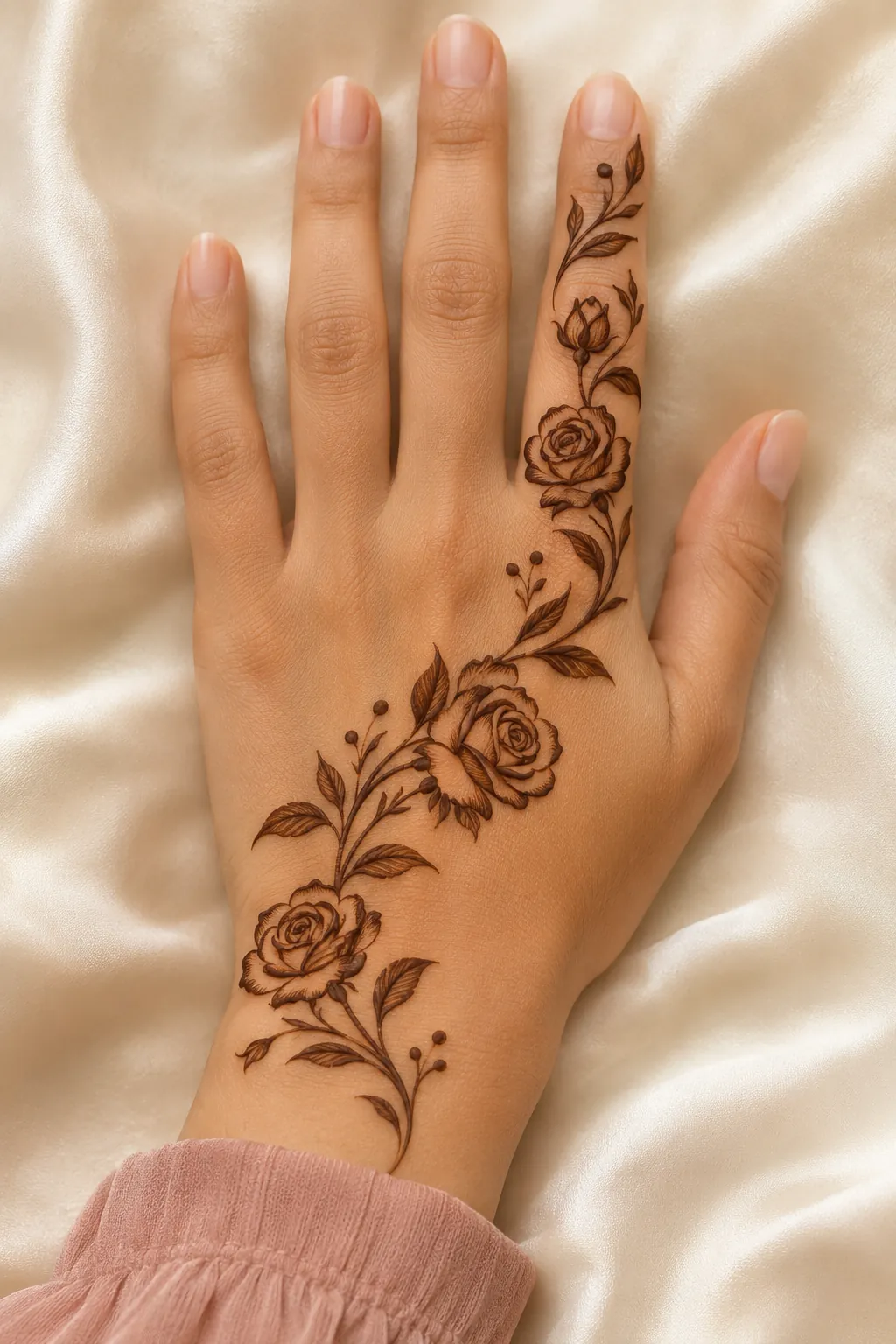
Arabic henna
Bold flowers with open skin between them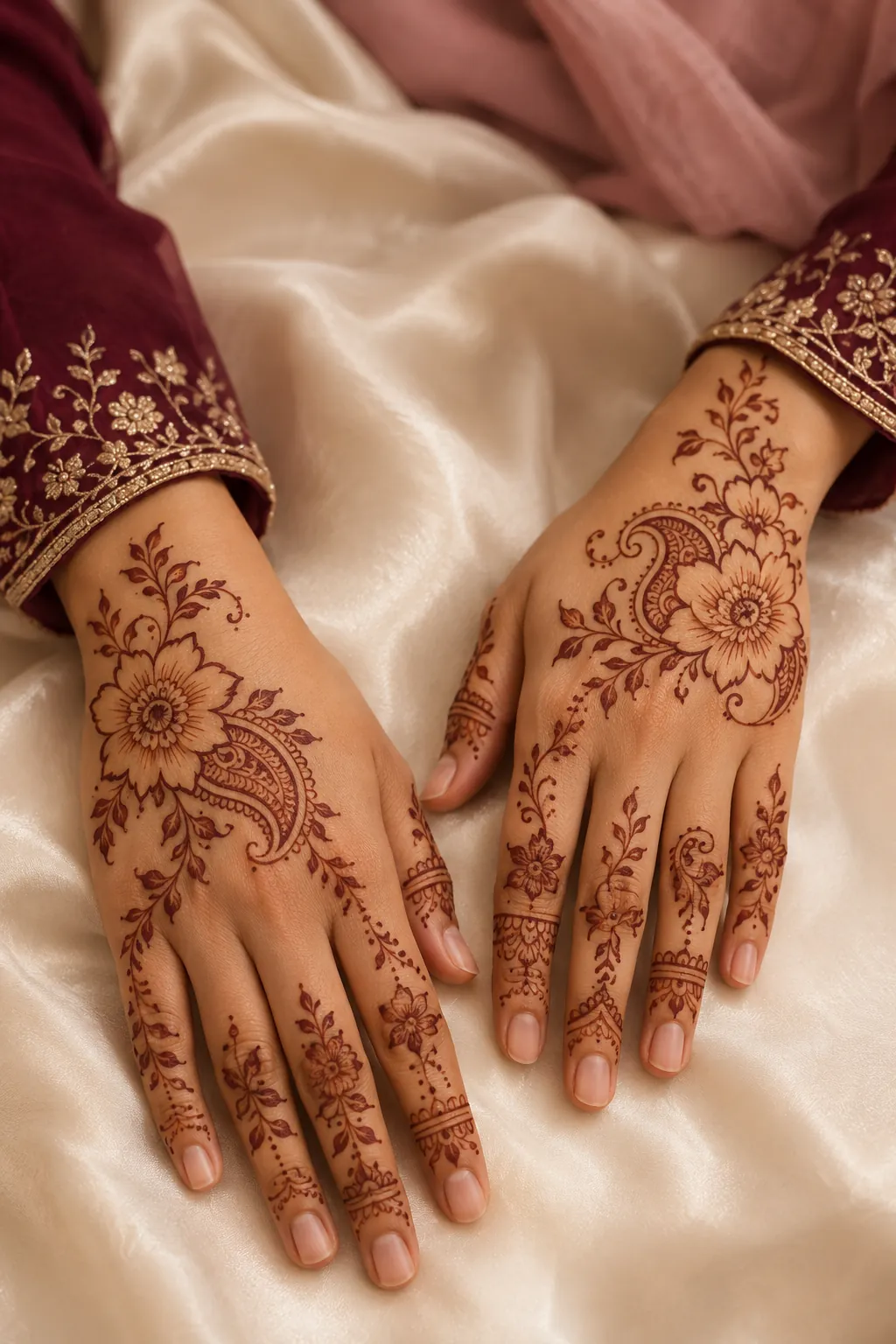
Indian mehndi
Paisleys, lotus and fine lattice, densely drawn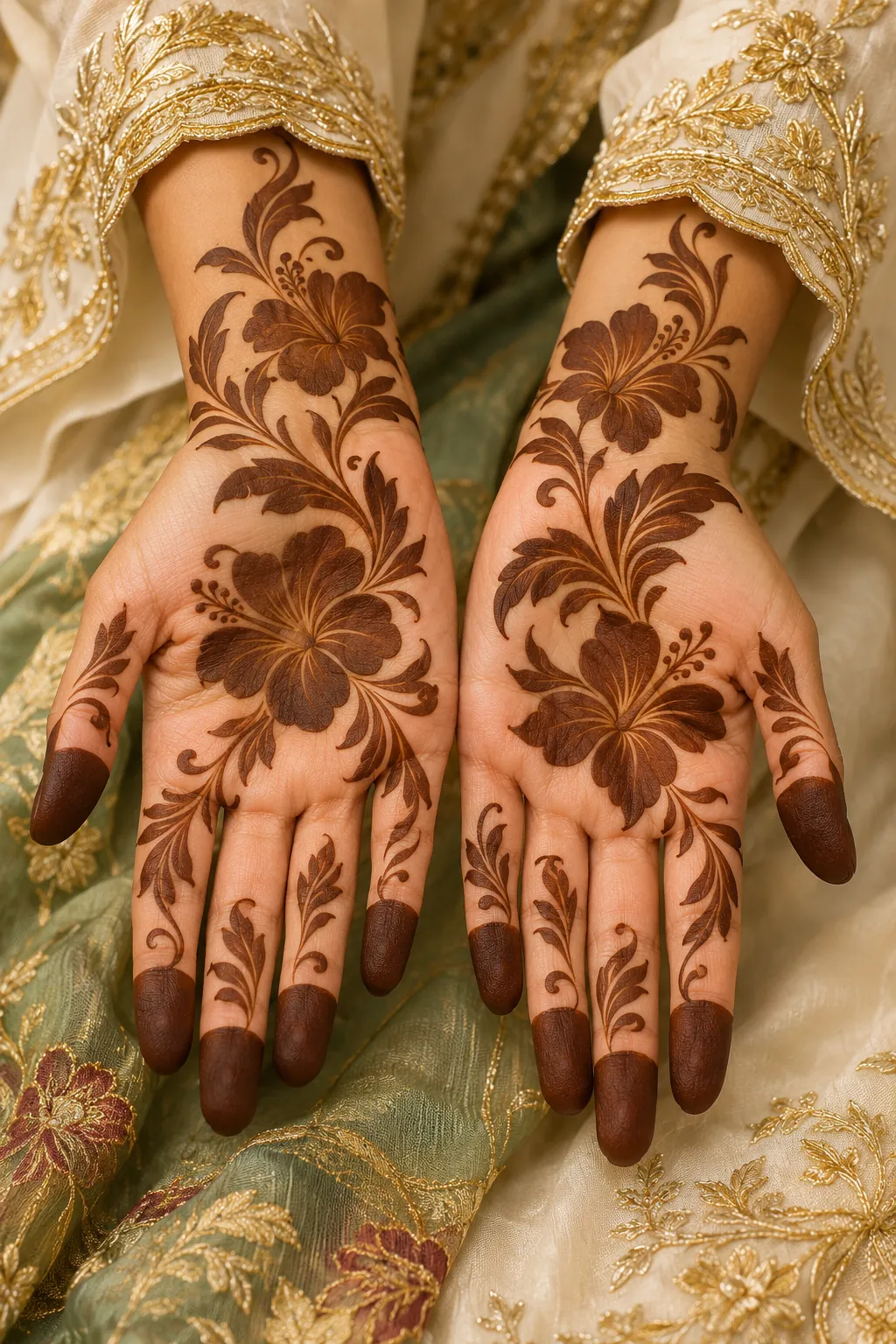
Khaleeji henna
Gulf flowers with solid dark fingertipsGet in touch to book your henna design
Tell us your date and your design, and we will take care of the rest.